

A long, much-loved mane: Ceropegia woodii and its common problems
Ceropegia Woodii is one of the most WOW plants thanks to its very long foliage, full of hearts or spades. Originally from South Africa, it belongs to the Apocynaceae family and has always enchanted anyone who encounters it on their plant-loving journey. Unfortunately, Ceropegia is also among the plants with which it is often difficult to get along.
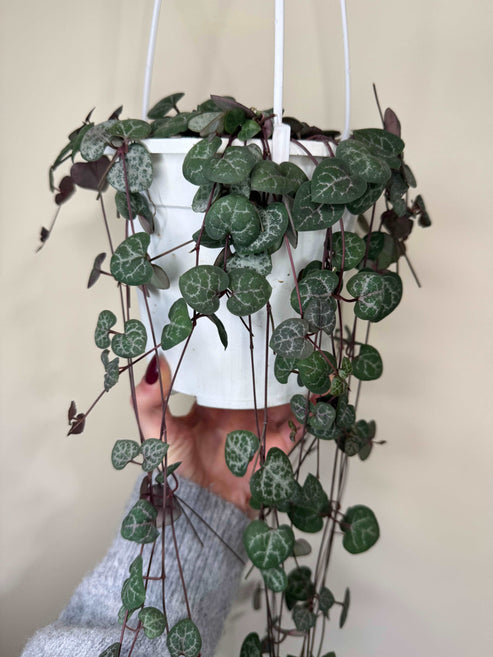
Common Problems with Ceropegia Woodii
Often, those who grow Ceropegia encounter many small problems.
The most common problems affecting Ceropegia are:
- Waterlogging: too frequent watering
- Lack of light: leaf loss and/or loss of its vibrant color.
- Water stress due to prolonged absence of water.
So, how should you behave? Too much water, too little water… let's clarify!
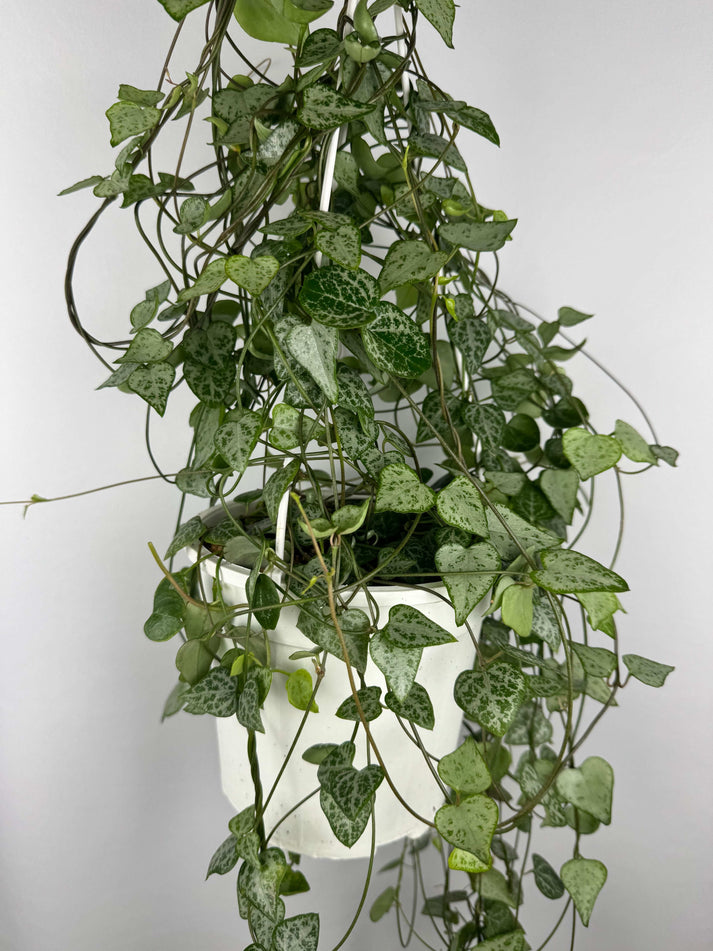
How to care for Ceropegia Woodii: two tips to avoid problems
There are two tips you need to follow. I assure you that, if implemented, you will no longer have problems with your thick foliage!
Light
Ceropegia needs excellent light exposure and an excellent amount of light. There's not much to do: it's not at all a friend of low light exposure. If it receives little light, it immediately starts to rebel.
Watering
It should be watered when the substrate is completely dry. This means that consistency and linearity in watering will be maintained, avoiding water stress from excess or lack of water. The secret, therefore, is to let the substrate dry out between waterings.

A "reverse" problem: water stress from lack of water
Generally, the most frequent problem in plant management is overwatering.
With Ceropegia (as with other plants, including many succulents), an inverse fear arises: "I'm afraid it will rot, so I won't water it yet!" This also causes stress, which leads to a response from the plant (leaf loss, yellowing, etc.).
Ceropegia needs water, and you shouldn't be afraid to water it. It's just important to wait for its time, and learn to recognize it.
Baldness: a typical problem of Ceropegia Woodii
Ceropegia Woodii often has this "tendency" to lose leaves at the base. This is mainly for two reasons:
- Excess water
- Lack of light
We have already discussed these two factors, how to manage them and how to resolve them in the best possible way.
I want to give you a bonus tip: water your Ceropegia from below. This way, you won't disturb the base of the plant, and you can keep its "baldness problem" in check.
Leaf loss at the base: how to make Ceropegia fuller
If you are reading this article, it is most likely because the damage has already been done. Don't worry, we'll fix it right away!
If your Ceropegia is currently lacking leaves at the base, here's a quick trick to make it fuller, avoiding cuts and risks:
- Lift some branches and make a couple of turns around the surface, then secure them well with tweezers or hairpins. Finally, cover the small nodes with substrate, leaving only the leaves clearly visible. In a few weeks, you will notice a wonderful rebirth!