

Climbing Plants and Plant Supports: Which Ones to Use and Why
Plant supports are one of those accessories that a plant lover attempts to use, or at least research, at some point!
Why use a plant support?
A plant support can be used for two reasons:
- Aesthetic value: for pure pleasure, with the intention of creating a wonderful, out-of-the-box collection! Or to achieve specific goals (e.g., large leaves).
- Necessity: some plants require support due to their structure. Otherwise, they risk breaking or growing in a messy and unhealthy way.
Types of plant supports
The question often asked is: what's the difference? Which support should I buy?
The answer to these questions depends on the plant species and the goals you want to achieve with it.
Mainly, we can classify plant supports into two categories: structural supports and aesthetic-functional supports.
These offer solid and resistant support, ideal for plants that need stable bracing. An example of a support belonging to this category is the honeycomb support which, with its robust and perforated structure, ensures constant humidity for the plant's aerial roots, promoting their development and growth.
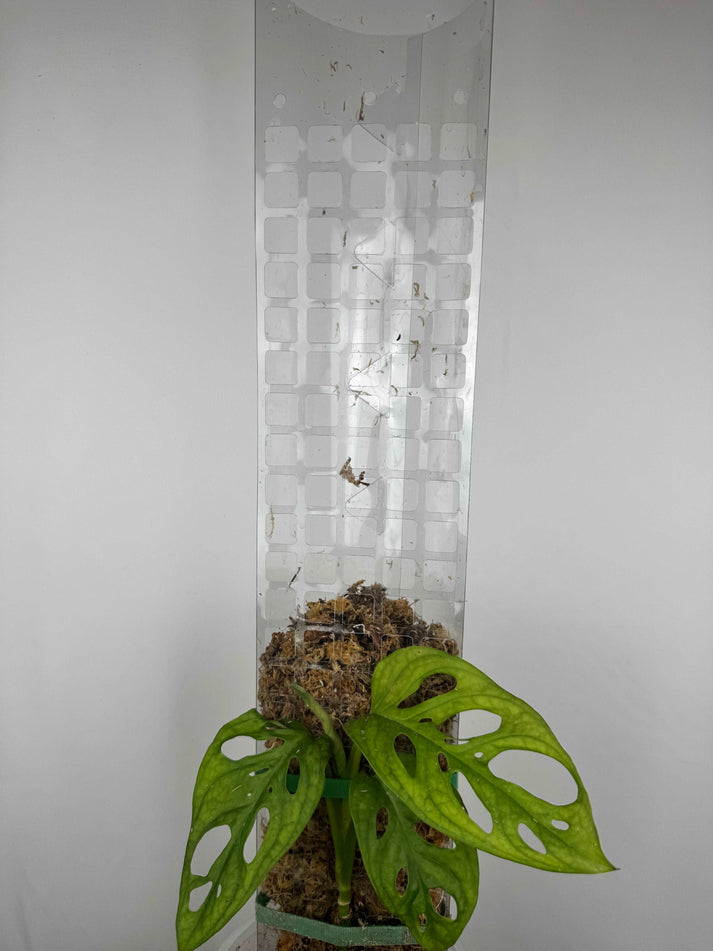
How to use the honeycomb support?
- Filling: the honeycomb support should be filled with inert materials or substrates, so that it can provide the stem's aerial roots with a pleasantly moist resting place. My advice is to insert sphagnum moss, the ultimate helper for the development and maintenance of aerial roots.
- Fastening: the perfect helper for fastening the plant stem to the honeycomb support, at multiple points, is undoubtedly velcro tape. Gentle on stems, but strong in hold.
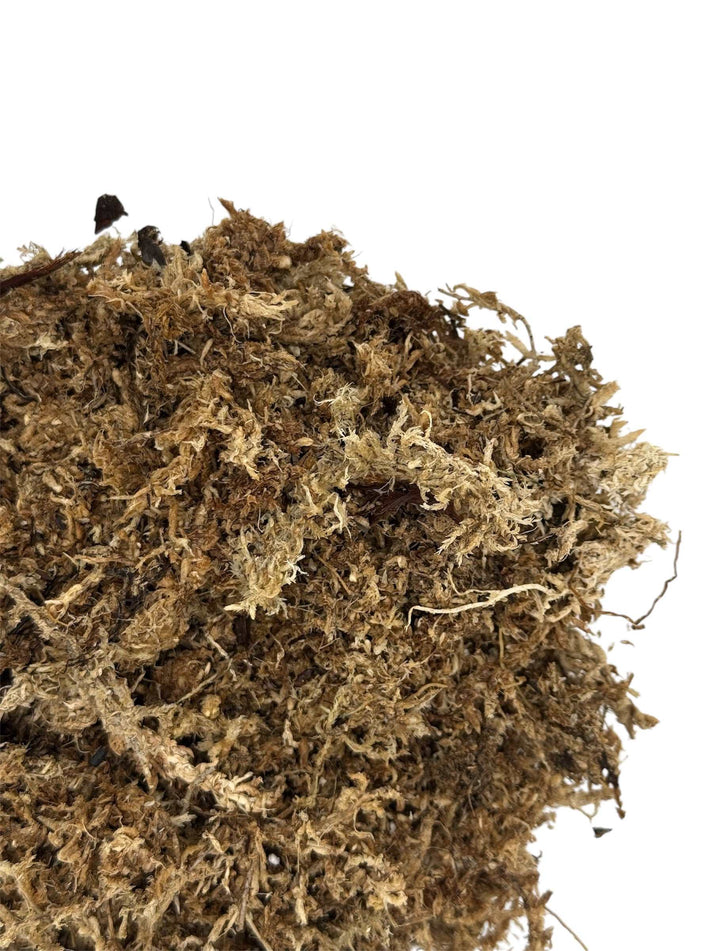
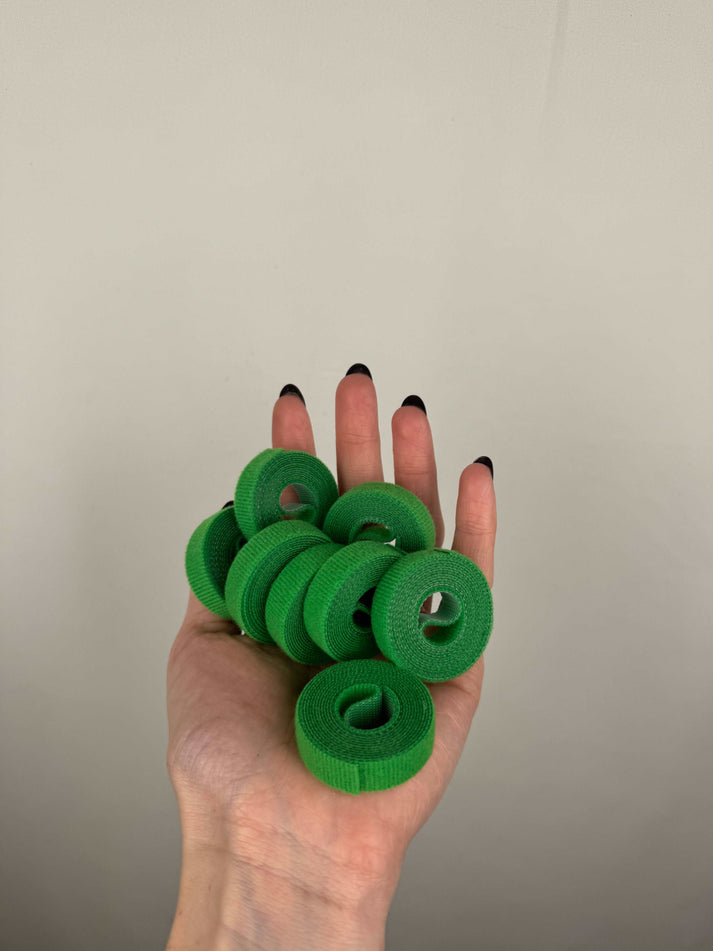
When to use the honeycomb support
The honeycomb support can be used in the following cases:
- Plant structure: some species, given their conformation, necessarily require this type of support. Examples include Monstere (Monstera Thai, Monstera Deliciosa, Monstera Albo variegata, Monstera Obliqua etc), some Philodendron (Philodendron Paradiso Verde, Philodendron "Ring of Fire"), and Anthurium.
- Specific goals and needs: if we want, for example, to obtain large leaves, then a honeycomb support is what we need!
These have a mainly decorative function, while also offering support to climbing plants. The acrylic arch support certainly belongs to this category. It is used to achieve a particular and chic result by wrapping the plant branches around the structure (there are many different shapes!). As the plant grows, the structure will be completely covered with leaves and stems, maintaining only its shape (circle, heart, arch) and achieving an amazing result!
Imagine a shelf with many plants on it, each paired with an acrylic or iron support: a feast for the eyes!
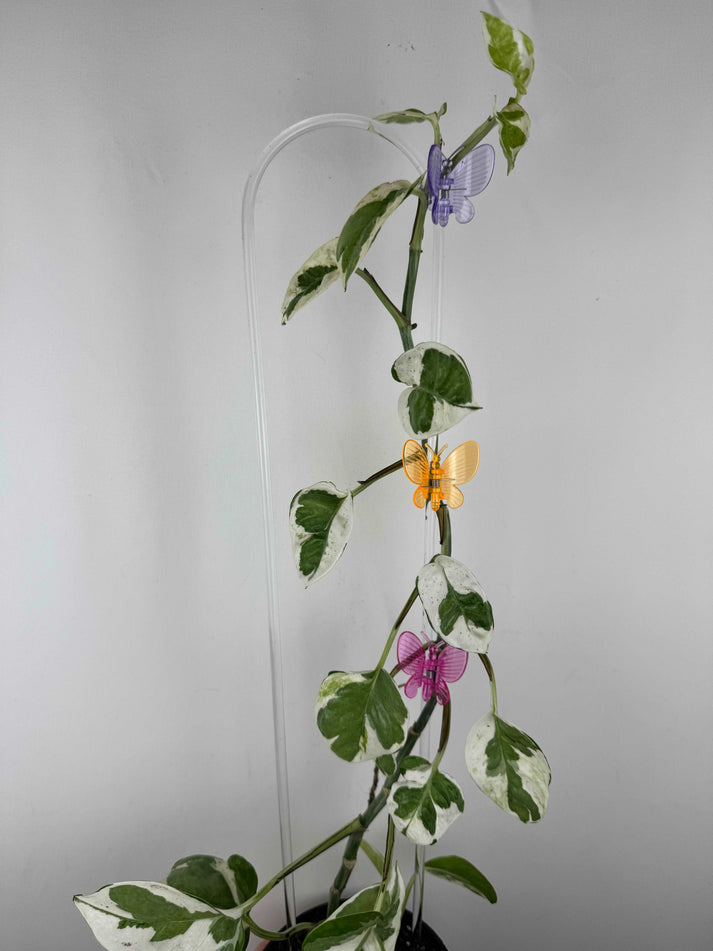
How to use the arch support
-
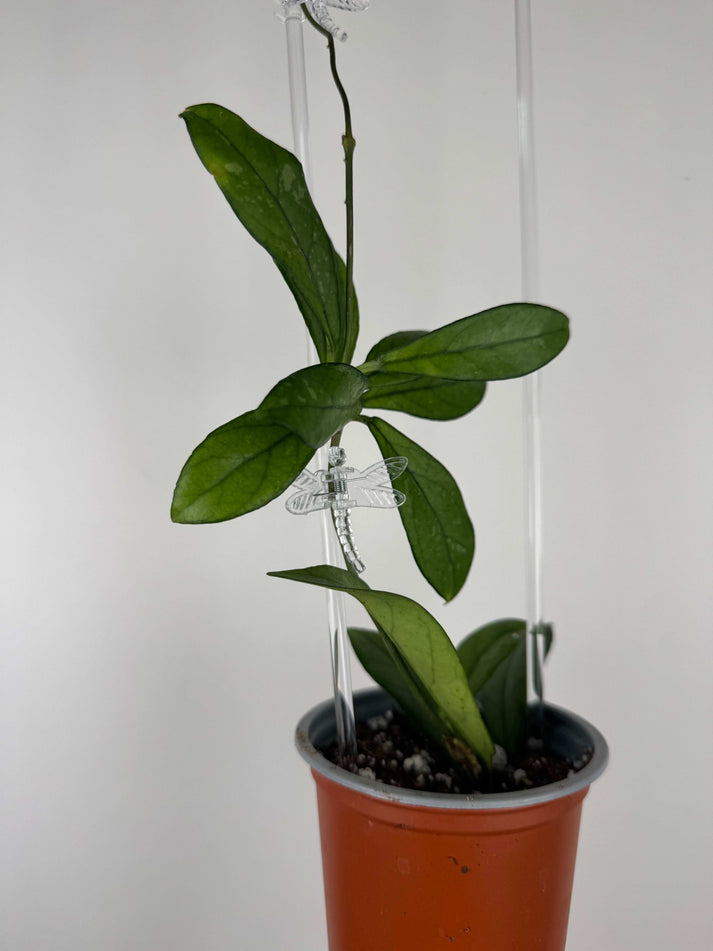
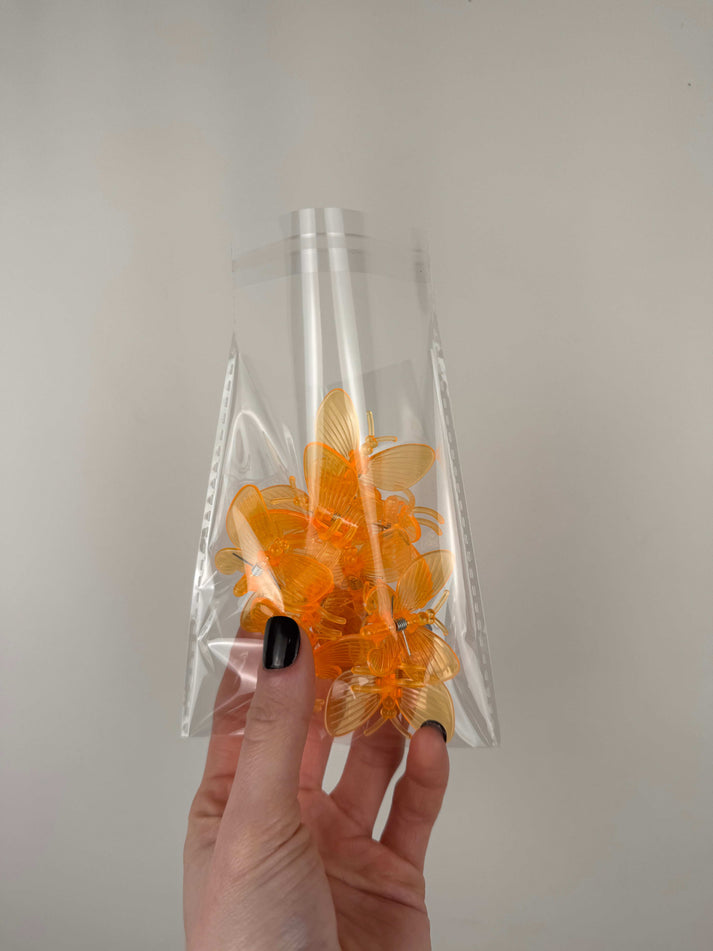
Fastening: the perfect accessory for this type of support are plant clips, specifically designed to ensure gentleness without damaging stems (thanks to the absence of internal grip).
When to use the acrylic support
-
Necessity: the conformation of some trailing plants (Hoya, Aeschynanthus, Ceropegia, etc.) is ideal for this type of support, and not for the honeycomb one. Additionally, if you prefer to grow your plant as a climber rather than a trailing plant, or if you have limited space, it is the perfect solution to keep your plant compact and tidy.
-
Aesthetic pleasure: if you prefer to avoid bulkier or visually "heavy" supports, using this type of support is an excellent aesthetic choice.
So, as you may have noticed, choosing the right plant support depends on both your preferences and needs, and a choice dictated by the plant's own conformation.